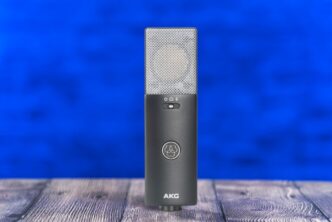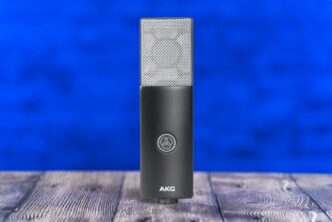
AKG’s latest refresh of its microphone lineup has done more than replace a few aging models. Alongside the C104 and C114, the company has introduced the C151, a compact small-diaphragm condenser that takes over from the older Perception P170 while moving it into the more prestigious C-series family.
On paper, the C151 looks fairly straightforward. It’s a fixed-cardioid pencil condenser with a 16 mm electret capsule, transformerless circuitry, and no onboard pads or filters. In other words, AKG has kept things simple and focused on delivering a practical studio tool at an accessible price point.
In this review, I’ll be taking a closer look at the AKG C151 and seeing how it performs across a range of recording applications.

Final verdict
The AKG C151 is one of those microphones that quietly exceeds expectations. Given its price and relatively modest feature set, I initially expected a fairly typical entry-level pencil condenser. Instead, what AKG has delivered is a clean, articulate, and surprisingly capable microphone that performs well above what its asking price would suggest.
Its strengths lie in capturing detail, handling transients, and staying out of the way of the source. While it lacks some of the refinement and flexibility of more expensive small-diaphragm condensers, it remains a remarkably useful microphone for instruments, percussion, overheads, and even the occasional vocal recording.
What I like
- Detailed and articulate sound.
- Great transient response.
- High SPL handling.
- Very good for acoustic instruments and drums.
- Lightweight and easy to position.
- Excellent value for money.
What I don’t like
- Can sound slightly bright on certain sources.
- Off-axis response isn’t as refined as higher-end models.
Polar pattern and frequency response
The AKG C151 is a cardioid small-diaphragm condenser microphone built around a 16 mm electret capsule. It offers a frequency response of 20 Hz – 20 kHz, a sensitivity of 11 mV/Pa, and a maximum SPL rating of 143 dB.
Unlike AKG’s flagship C451 B, the C151 keeps things simple. There are no attenuation pads, no filters, and no additional switches to worry about. While some engineers may miss those features, the trade-off is a straightforward microphone that’s easy to set up and use.
Tonally, the C151 leans toward the brighter side of neutral. There is a noticeable emphasis in the upper frequencies that helps bring out detail, articulation, and transient information. Fortunately, it avoids the brittle or grainy character that often plagues inexpensive pencil condensers.
The low end is somewhat restrained, particularly below 100 Hz. In practice, this helps keep recordings tidy and focused rather than bloated. For acoustic instruments, percussion, and overhead duties, I find this voicing generally works in the microphone’s favor.
One thing worth noting is the off-axis response. While the on-axis capture is clear and detailed, sounds arriving from the sides and rear become noticeably darker. This isn’t necessarily a deal-breaker, but it does mean the microphone isn’t quite as natural-sounding off-axis as some higher-end small-diaphragm condensers.
The published self-noise figure of 21 dBA is also a little higher than I would ideally like to see. However, in most real-world recording situations, I doubt many users will find it problematic.
Vocals 4.0
Small-diaphragm condensers are rarely my first choice for vocals, but the C151 performs better than I expected.
Its articulate upper-midrange and high-frequency response help speech and vocals remain clear and intelligible, which can be particularly useful for podcasting, streaming, and spoken-word applications. The microphone also exhibits a surprisingly musical proximity effect when used up close.
That said, plosives can become an issue. A quality pop filter is practically mandatory here, and some voices may find the microphone’s brighter presentation slightly unforgiving.
For singers seeking warmth and fullness, I’d probably reach for the C104 or another large-diaphragm condenser first. Still, depending on the vocalist and the style of music, the C151 can certainly produce usable results.
Spoken word
For spoken word applications, the C151’s clarity becomes one of its biggest strengths.
Dialogue, narration, and podcast recordings benefit from its articulate presentation and excellent intelligibility. The microphone cuts through busy mixes well and captures plenty of detail without sounding overly processed.
The elevated self-noise means it wouldn’t necessarily be my first choice for extremely quiet voiceover work recorded in a heavily treated studio, but for most content creation applications, it performs admirably.
Its slim profile is another practical advantage. It stays relatively unobtrusive on camera compared to many larger broadcast-style microphones.
Acoustic guitars 4.9
This is where the C151 really starts to shine.
The microphone’s fast transient response captures pick attack, string detail, and subtle dynamics exceptionally well. Acoustic guitars come across as open, articulate, and polished without sounding overly hyped.
I particularly like the sense of air it brings to steel-string instruments. There is a natural sheen to the upper frequencies that often sounds as though a tasteful high-frequency EQ boost has already been applied.
For stereo recording setups, a matched pair of C151s could form the basis of a very capable and affordable acoustic recording rig.
Guitar amps 4.5
The C151 works surprisingly well on guitar cabinets.
Its detailed top end helps preserve the character of clean and edge-of-breakup tones, while the high SPL handling means it has no trouble coping with louder amplifiers.
For heavily distorted sounds, I might pair it with a dynamic microphone to add a little more body and weight. On its own, the microphone’s leaner low-end character can occasionally leave high-gain tones feeling slightly less substantial than I’d prefer.
Still, if you’re looking to capture a clean and accurate representation of an amp, the C151 performs very well.
Bass amps 3.0
This isn’t necessarily the first application that comes to mind for the C151.
While the microphone can certainly handle the volume, its low-frequency roll-off and overall voicing don’t do much to emphasize the depth and fullness that most engineers look for when recording bass cabinets.
I can see it working as a supplementary microphone alongside a DI or a larger microphone, helping to capture additional articulation and string definition. On its own, however, I think there are better tools available for the job.
Drums 5.0
Drums are arguably where the C151 feels most at home.
The microphone’s transient response allows it to capture cymbals, hi-hats, percussion, and snare detail with excellent clarity. As overheads, a stereo pair delivers a focused and detailed picture of the kit without becoming harsh or brittle.
I was particularly impressed by how useful the microphone can be around the snare drum. Whether positioned underneath the snare or used to capture additional snap and articulation, it consistently delivers clean and punchy results.
Its high SPL handling also means there’s plenty of headroom available, even in louder recording situations.
For home studios looking to build an affordable drum-miking setup, the C151 is an easy recommendation.
Build quality 4.8
The C151 is a simple microphone, but it doesn’t feel cheap.
The satin-black finish looks professional, the supplied clip is sturdy, and the overall construction inspires confidence. Despite its budget-friendly price, the microphone feels well put together and capable of handling regular studio use.
I also appreciate AKG’s efforts to incorporate recycled materials and environmentally conscious packaging throughout the new C-series range.
While it lacks the premium feel of more expensive studio condensers, there’s nothing about the C151’s build quality that raises concern.
Who is the AKG C151 best suited for?
The AKG C151 is best suited for musicians, home studio owners, content creators, and engineers looking for an affordable small-diaphragm condenser that delivers professional-sounding results without demanding a professional-sized budget.
If your primary needs involve acoustic instruments, drum overheads, percussion, spoken word, or general recording duties, the C151 offers an impressive balance of clarity, reliability, and value.
It may not replace a high-end C451 B or other premium mics, but in my opinion, it gets surprisingly close to that territory for a fraction of the price, and that’s what makes it such a compelling microphone.
See current price at: SweetwaterAmazon