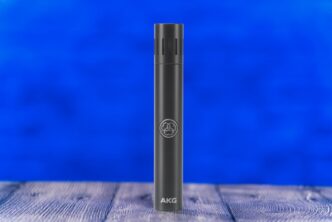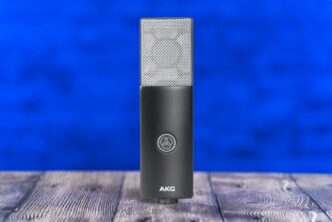
AKG has spent decades producing some of the most recognizable condenser microphones in the industry. Models like the C12 and C414 have become studio staples, though their price tags have often placed them beyond the reach of many studios. The company’s latest C-series additions aim to change that.
Following the release of the cardioid-only C104, the C114 takes things a step further, replacing the older Perception P420 with a true condenser design, three switchable polar patterns, and a surprisingly accessible price point.
In this review, I’ll be taking a look at the AKG C114 and seeing how it stacks up as a modern studio workhorse.

Final verdict
The AKG C114 is one of the most impressive microphones I’ve tested in this price range. It doesn’t try to wow you with excessive coloration or gimmicky voicing. Instead, it focuses on delivering a clean, balanced, and versatile performance that works across a remarkably wide range of applications.
What impressed me most is how mature it sounds. The top end is smooth, the midrange feels natural, and the microphone captures detail without becoming harsh or overly clinical. Combined with three switchable polar patterns, low self-noise, and high SPL handling, the result is a microphone that feels equally at home in a bedroom studio or a professional recording environment.
It may not replace a premium C414 or other high-end studio staple, but the performance gap is far smaller than the price difference would suggest.
What I like
- Smooth and detailed top end.
- Excellent versatility.
- Low self-noise.
- High SPL handling.
- Outstanding value for money.
What I don’t like
- No pad switch.
- No high-pass filter.
Polar pattern and frequency response
The AKG C114 is a large-diaphragm true condenser microphone featuring a 26 mm dual-diaphragm capsule and three switchable polar patterns: cardioid, omnidirectional, and figure-8.
Unlike many microphones in this price range, the capsule uses an edge-terminated design inspired by AKG’s classic C12 and C414 lineage. While this isn’t the same capsule found in those microphones, the overall voicing appears to borrow some of the same design philosophy.
The microphone offers a frequency response of 20 Hz – 20 kHz, a self-noise of 12 dBA, and a maximum SPL of 145 dB. Those numbers translate into a microphone that remains quiet enough for spoken word work while also having plenty of headroom for loud instruments and percussion.
Tonally, the C114 strikes me as surprisingly balanced. The midrange is broad and natural, with very little in the way of obvious coloration. There is some high-frequency emphasis, but it feels smooth and controlled rather than aggressive.
Cardioid mode is likely where most users will spend their time. Here, the microphone sounds articulate and open without becoming overly bright. Omni mode introduces a bit more top-end extension while also delivering a fuller low-end response. Figure-8 mode shifts more energy into the upper mids, producing a sound that cuts through a mix nicely, though I don’t find it quite as natural as cardioid.
One thing worth mentioning is the absence of both a pad and a high-pass filter. Given the microphone’s generous SPL handling, the lack of a pad isn’t a major issue, but I would have appreciated a low-cut filter for dealing with proximity effect and low-frequency rumble.
Overall, the C114 feels very much like a workhorse microphone in the best possible sense. Like the less expensive C104, it largely stays out of the way and lets the source speak for itself, but the added flexibility of multiple polar patterns makes it a much more capable studio tool.
Vocals 4.8
The C114 performs exceptionally well on vocals. Its balanced midrange and smooth high end make it suitable for a wide variety of singers without sounding overly flattering or overly critical.
What I particularly like is that the microphone captures detail without pushing sibilance forward. Some budget condensers attempt to create excitement with aggressive presence boosts, but the C114 takes a more refined approach.
Male and female vocals alike benefit from the microphone’s honest presentation. If you’re looking for a microphone that adds obvious color or vintage-style saturation, this probably isn’t it. However, if you want something reliable that consistently delivers usable tracks, the C114 is easy to recommend.
Live vocals
While the C114 could certainly be used in controlled live environments, it isn’t necessarily the first microphone I’d reach for on stage.
The multiple polar patterns provide some flexibility, and the microphone’s off-axis rejection is quite respectable in cardioid mode. However, its condenser sensitivity still means you’ll need to pay attention to stage volume and monitor placement.
For acoustic performances, broadcast-style productions, or intimate live sessions, I can see it working well. For most traditional stage applications, I’d still lean toward a dedicated live vocal microphone.
Spoken word
This is one of the areas where the C114 really shines.
The low self-noise figure of 12 dBA makes it well suited to podcasting, voiceovers, streaming, and other spoken-word applications. Voices sound clear, detailed, and natural without requiring much corrective EQ.
The smooth top end helps preserve articulation while avoiding the brittle character that sometimes plagues more affordable condenser microphones.
If you’re building a podcasting or content production setup and want something that leaves room for growth, the C114 is an excellent choice.
Acoustic guitars 5.0
The C114 is fantastic on acoustic guitar.
It captures plenty of detail and sparkle without becoming sharp or overly bright. The body of the instrument remains full and natural, while the upper frequencies retain enough clarity to help the performance sit comfortably in a mix.
Whether you’re recording strummed rhythms or fingerpicked passages, the microphone delivers polished and reliable results.
I could easily see a pair of these becoming a regular fixture in my studio.
Guitar amps 4.5
Electric guitar cabinets are another strong application.
The C114 captures clean and edge-of-breakup tones especially well thanks to its balanced midrange and smooth top end. High-gain sounds also translate nicely, although some engineers may prefer a microphone with a bit more attitude or coloration for heavier genres.
The 145 dB maximum SPL provides plenty of headroom, so loud amplifiers aren’t likely to cause any problems.
Overall, it’s a dependable option that prioritizes accuracy over personality.
Bass amps 4.0
Bass cabinets are not necessarily where the C114 stands out the most, but it remains perfectly usable.
The low end is controlled and articulate, though I wouldn’t describe it as especially thick or larger-than-life. In my opinion, the microphone works best when paired with a DI signal or another microphone that emphasizes more low-frequency weight.
That said, if your goal is to capture detail and definition from a bass cabinet, the C114 performs admirably.
Drums 5.0
The C114 handles drums exceptionally well.
Its high SPL capability makes it suitable for close-miking louder sources, while the balanced frequency response lends itself naturally to overhead and room microphone duties.
I particularly like what it brings to overhead applications. Cymbals retain detail and shimmer without becoming harsh, and the microphone captures the overall image of the kit in a clean and natural manner.
If you have the budget for a matched pair, I suspect many engineers would find themselves reaching for them regularly.
Build quality 4.8
The C114 feels solid and well made.
The body construction is robust, the switches operate with confidence, and the overall fit and finish are exactly what I’d expect from AKG. The included shock mount is also a welcome addition and feels more substantial than many accessories included at this price.
I also appreciate AKG’s efforts toward more sustainable manufacturing and packaging, though the microphone ultimately succeeds because of its performance rather than its environmental credentials.
Most importantly, nothing about the C114 feels cheap.
Who is the AKG C114 best suited for?
The AKG C114 is best suited for musicians, producers, podcasters, and engineers looking for a versatile studio workhorse that won’t stretch the budget.
Its greatest strength is flexibility. Whether you’re recording vocals, acoustic instruments, drums, voiceovers, or room ambience, the C114 consistently delivers clean and professional results.
If you’re searching for a microphone with a larger-than-life personality, there are more specialized options available. However, if you want a dependable condenser that can handle almost anything you throw at it, the AKG C114 is one of the easiest recommendations in its class.
See current price at: SweetwaterAmazon